New Haven IN Storm Damage Roof Repair

Rapid Residential Shingle Tarping, Commercial TPO Hot-Air Seam Welding & Severe Storm Exposure Mitigation Across East Allen County
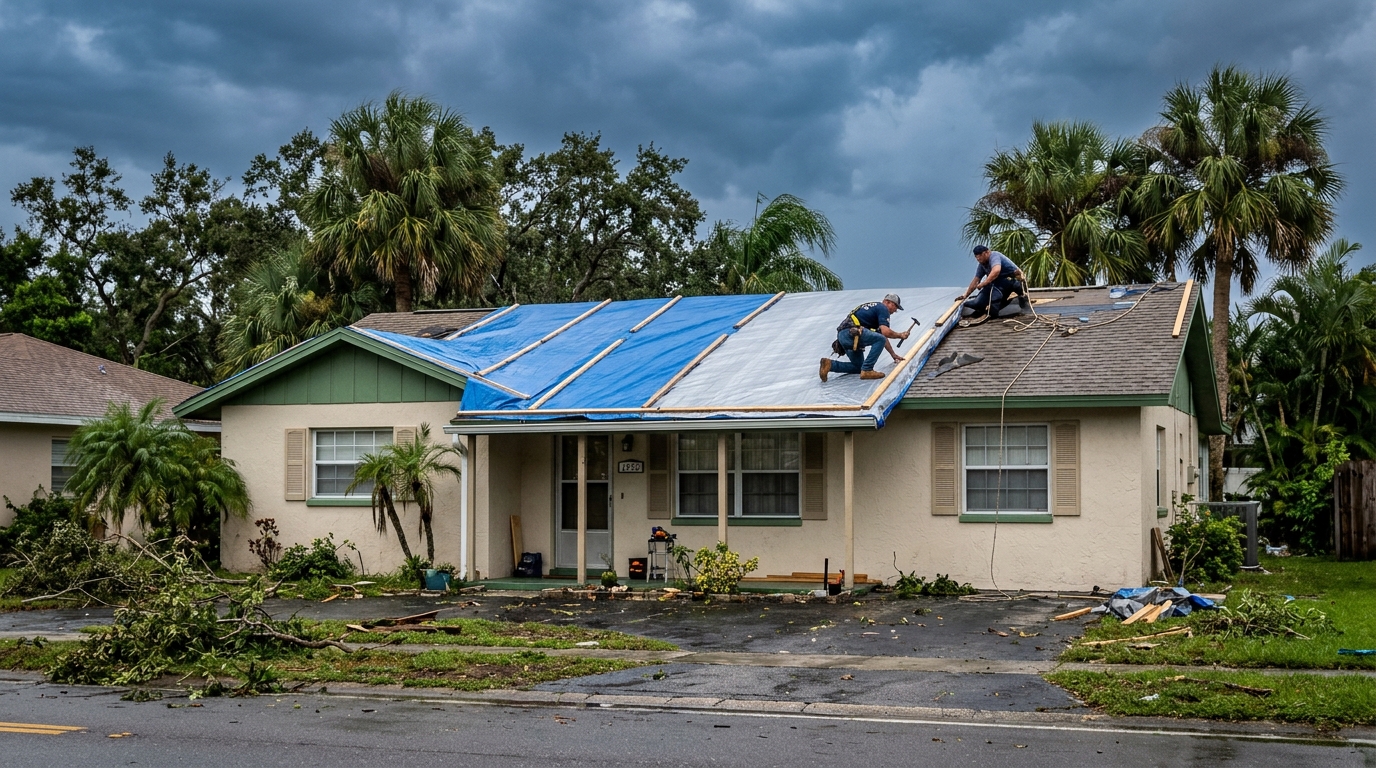
Bordering Fort Wayne immediately to the east along the US-24 and US-30 transportation corridors, New Haven combines bustling suburban neighborhoods with major commercial, warehousing, and light-industrial facilities. When severe Midwest thunderstorm squalls, straight-line winds, or wet winter snowstorms hit East Allen County, properties face rapid roof water intrusion. Roof Expert USA delivers 24/7 emergency roofing dispatch across New Haven for both residential and commercial structures.

Engineering Specialty: Commercial Membrane & Residential Shingle Triage

New Haven's diverse architectural landscape requires multi-discipline roofing expertise. Residential ranch homes and modern two-story subdivisions frequently suffer wind-torn three-tab and architectural shingles, flashing lifted by gale gusts, and failing rubber pipe boots. Simultaneously, New Haven's extensive industrial parks and distribution centers feature low-slope TPO, EPDM rubber, and modified bitumen membranes vulnerable to ponding water and mechanical seam failure.

Dispatched independent contractors are equipped for dual residential and commercial response. For residential emergencies, crews deploy timber-anchored polyethylene storm tarps, step flashing renewals, and emergency rafter shoring. For commercial flat roofs, specialists execute robotic and hand-held hot-air molecular seam welding, sub-membrane FLIR thermal moisture tracing, and tapered insulation installation to permanently eliminate destructive water ponding.

New Haven Emergency Response Capabilities

TPO Hot-Air Seam Molecular Fusion

Technicians weld synthetic patches onto commercial low-slope membranes at 900+ degrees Fahrenheit, restoring permanent monolithic waterproof seals over failed seams.

Emergency Residential Tarping

Rapid deployment of UV-stabilized 10-mil woven poly tarps secured with 2x4 spruce battens to protect exposed sheathing from torrential downpours.

Infrared Deck Moisture Auditing

High-resolution FLIR thermal cameras detect saturated insulation boards beneath flat membranes and mapped rafter moisture trails in residential attics.

Gutter & Scupper Debris Clearing

Emergency removal of storm debris and ice blockages from commercial roof drains and scuppers to relieve dangerous hydraulic head pressure.

Frequently Asked Questions

Can emergency crews service both residential and commercial roofs in New Haven? +

Yes. Our dispatch network connects property owners with certified specialists experienced in both residential steep-slope shingles and commercial low-slope single-ply membranes (TPO, EPDM, PVC).

What is the typical emergency response window for New Haven, IN? +

Because New Haven borders Fort Wayne directly along SR-930 and US-30, on-call emergency contractors typically reach job sites within 45 to 90 minutes.

Why is ponding water dangerous on New Haven commercial roofs? +

Standing water adds thousands of pounds of structural dead load, degrades rubber polymers via magnified UV solar radiation, and causes freeze-thaw seam tearing during Indiana winters.

Are insurance claim documentation packages provided after emergency repairs? +

Yes. Contractors supply itemized invoices, FLIR thermal moisture images, and high-resolution photo documentation required by insurance adjusters to process storm damage claims.

Northern Indiana Regional Technical Engineering & Ice Dam Protocols

1 Regional Microclimate Dynamics & Lake Erie / Northern Indiana Ice Dam Exposure

Fort Wayne and Allen County occupy a distinctive meteorological zone influenced by lake-effect snow bands tracking off Lake Michigan and Lake Erie. Heavy winter snowfall accumulates rapidly across residential roof planes. When warm indoor air escapes into unconditioned attics, it melts the under-layer of rooftop snow. This meltwater trickles down toward exterior eaves, gutters, and overhangs, where freezing outdoor temperatures turn the runoff into massive, solid ice ridges known as ice dams.

As continuous snowmelt pools behind the ice dam, hydrostatic pressure forces trapped water horizontally beneath shingle laps, soaking underlying sheathing, drenching cellulose insulation, and breaking through interior ceiling drywall across Fort Wayne, New Haven, and Auburn.

2 Non-Destructive Moisture Diagnostics & FLIR Thermal Tracing

Active water intrusion rarely enters in a direct line beneath a ceiling stain. Dispatched independent roofing specialists utilize high-resolution FLIR infrared thermal imaging cameras to track hidden moisture migration along roof rafters, wiring conduits, and attic vapor barriers. Cold water pockets within saturated insulation create high-contrast thermal signatures on infrared monitors.

Calibrated dielectric capacitance impedance meters assess roof deck saturation without tearing off intact architectural shingles, providing verified documentation for emergency mitigation and homeowner insurance records.

3 Step-by-Step Substrate Restoration Methodology

Permanent restoration follows a rigorous four-phase protocol: (1) Low-pressure industrial steam equipment melts relief drainage channels through ice dams without hammer impact or shingle fracture; (2) Water-logged sheathing is extracted and rafters inspected for fungal rot; (3) Self-adhering high-temperature SBS-modified rubberized asphalt ice-and-water shield is installed extending a minimum of 36 inches inside the interior heated wall line; (4) Class 4 impact-resistant architectural shingles and valley metal diverters are installed with ASTM D4586 butyl hand-seals.

4 Indiana Building Energy Codes & Contractor Licensing Compliance

All roofing work in Fort Wayne must comply with the Indiana Residential Code (675 IAC 14) and local building regulations overseen by the Allen County Building Department. In Northern Indiana, mandatory ice barrier underlayment rules require protective self-adhering membrane coverage from the lowest roof edge to at least 24 inches inside the interior exterior wall plane.

Dispatched contractors maintain active business registration with the Indiana Secretary of State, carry active General Liability ( minimum) and Indiana Workers' Compensation coverage, and pull all required Allen County permits prior to structural roof reconstruction.

5 Preventative Property Maintenance & Winter Ice Dam Preparedness

Proactive maintenance shields properties against costly emergency damage:

  • Soffit Intake Vent Maintenance: Keep continuous perforated soffit vents free of bird nests, paint clogs, and insulation blockages to ensure cold outdoor air circulates beneath roof sheathing.
  • Attic Insulation & Air Sealing: Seal attic bypasses around chimney chases, plumbing stacks, and recessed can lights to prevent interior heat from warming the roof deck.
  • Valley Metal Seal Renewal: Clear autumn leaf debris from closed and open valleys to prevent ice dams from damming torrential meltwater channels.
  • Biannual Pipe Boot Audits: Inspect rubber plumbing boots for UV ozone cracking and replace brittle collars with seamless lead or silicone units before sub-zero winter temperatures arrive.
CALL NOW — (888) 208‑4155