Emergency Roof Leak Repair Fort Wayne IN
Rapid 24/7 Active Water Intrusion Triage, Winter Ice Dam Leak Containment & Thermal Rafter Moisture Tracing Across Allen County
When freezing rain, lake-effect blizzard snowpack, or violent summer convective storms strike Allen County, active roof leaks inflict immediate structural damage to drywall ceilings, blown cellulose insulation, and electrical systems. Roof Expert USA operates Fort Wayne's dedicated 24/7 emergency dispatch intake network, immediately mobilizing independent, licensed, and insured roofing contractors across Fort Wayne, New Haven, Auburn, and surrounding Northeast Indiana communities. Our partner specialists arrive fully equipped for rapid leak containment, attic moisture tracing, and permanent weather-tight repairs.
Engineering Specialty: Winter Ice Dam Ceiling Leak Fix
In Northeast Indiana, winter sub-freezing temperatures combined with heavy snow accumulation from Lake Michigan and Lake Erie weather fronts create severe ice dam vulnerabilities. When warm air escapes into under-insulated attic spaces, it warms the upper roof deck, melting bottom layers of the snowpack. This meltwater cascades down the slope until it reaches unheated roof overhangs and cold eaves, where it refreezes into an expanding solid ice ridge.
As subsequent snow continues to melt, water pools behind the frozen barrier. Because asphalt shingles are engineered to shed water downward by gravity rather than resist hydrostatic head pressure, trapped water backs up beneath the shingle laps, penetrates the roofing underlayment, saturates plywood sheathing, and pours along ceiling rafters. Dispatch specialists deploy non-destructive low-pressure steam decompression equipment to carve drainage channels through ice dams without destroying delicate asphalt granules or tearing flashings, followed by interior ceiling water containment and attic moisture extraction.
Emergency Roof Leak Containment Protocols
Immediate Ceiling Pressure Relief
Technicians perform controlled drywall puncture at the lowest deflection point of water accumulation, directing pooled ceiling water into containment funnels to prevent catastrophic ceiling collapse.
Attic Rafter Flow Tracing
Because water frequently travels 15 to 30 feet along roof trusses, top plates, and electrical conduits before dripping, crews inspect structural members from within attic crawlspaces to locate the true roof deck penetration point.
Low-Pressure Steam De-Icing
Contractors use specialized high-temperature, low-pressure steam wands to gently melt drainage trenches through thick ice dams, relieving hydrostatic pressure without the shingle damage caused by hammers, axes, or picks.
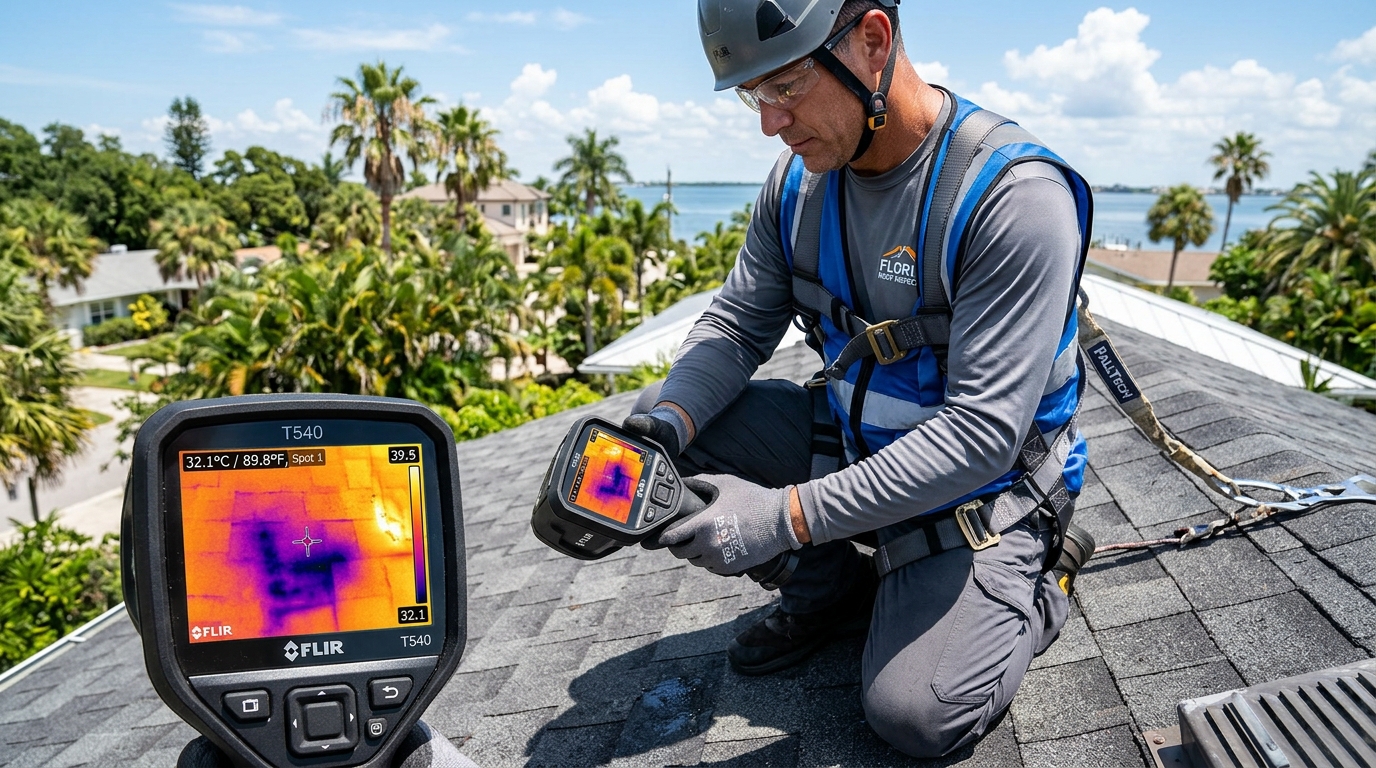
FLIR Thermal Deck Verification
High-resolution infrared thermal imaging scans identify the boundaries of wet insulation and damp substrate sheathing, ensuring all hidden moisture pockets are mapped for thorough remediation.
Active Roof Leak Triage Checklist for Homeowners
While awaiting emergency dispatch crew arrival, taking immediate protective steps inside your home can save thousands of dollars in interior repair costs:
- Place Catch Basins: Set large plastic tubs or buckets beneath active drips, placing a towel inside the container to prevent loud water splashing and floor spatter.
- Relieve Sagging Drywall: If paint or drywall is bubbling or bulging, carefully push a screwdriver or pencil through the center of the bubble into a bucket to release trapped weight before the drywall sheet collapses.
- Protect Furniture & Electronics: Move electronics, valuable furnishings, and rugs away from the drip path, covering stationary items with heavy polyethylene plastic sheeting.
- Do Not Walk on Frozen Roofs: Never climb onto a snow-covered, icy, or rain-slicked roof. Snow conceals brittle shingles and skylight domes, presenting severe fall hazards.
- Call 24/7 Live Intake: Connect immediately with our emergency coordinator at (888) 208-4155 to dispatch on-call crews.
Frequently Asked Questions
What causes sudden ceiling water leaks during winter in Fort Wayne? +
In Fort Wayne winters, ice dams along cold roof eaves prevent melted snow from draining off the roof. The pooled water backs up beneath shingles and penetrates underlayment, tracking down attic rafters and saturating ceiling drywall.
Can contractors repair a roof leak while it is actively raining or freezing? +
Yes. On-call emergency roofing contractors deploy temporary mitigation procedures including reinforced waterproof tarping, magnetic sealing membranes, flashing caulking, and steam ice channeling to halt water intrusion until permanent weather allows dry repairs.
How quickly can emergency roofing contractors arrive at my Fort Wayne property? +
Dispatch coordinates on-call roofing crews throughout Fort Wayne, New Haven, Auburn, and Allen County with target emergency response windows typically between 60 and 120 minutes depending on storm severity and crew availability.
Why should I avoid using salt pucks or rock salt to melt ice dams? +
Rock salt and chemical pucks contain sodium chloride and corrosive compounds that strip mineral granules from shingles, corrode metal valley flashings and aluminum gutters, and cause brown discoloration and chemical runoff damage to foundation landscaping.