Emergency Roof Tarping Fort Wayne IN
Commercial-Grade 10-Mil Polyethylene Tarp Encapsulation Anchored with Timber Battens for High-Wind & Fallen Tree Protection
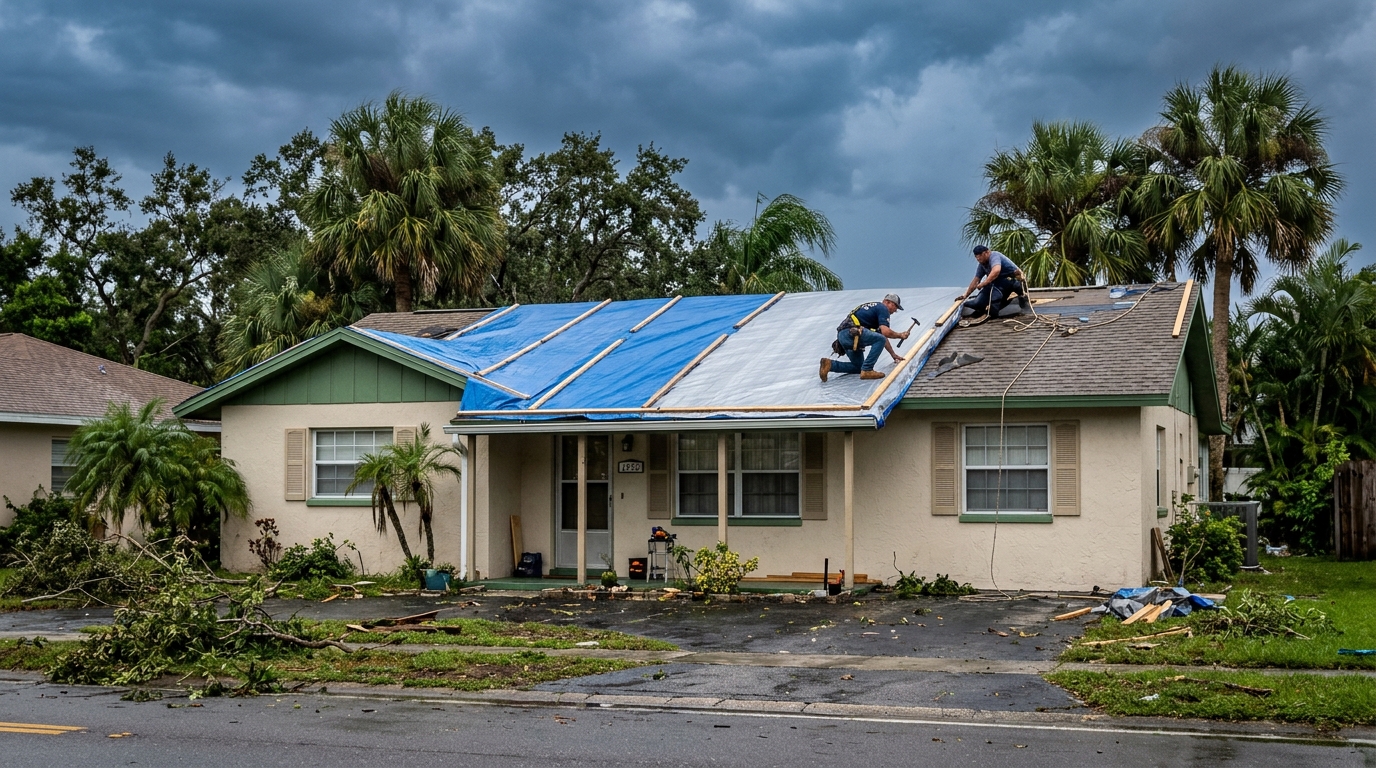
When high-velocity wind gusts, microbursts, falling tree limbs, or severe hail storms strip shingles and perforate decking across Fort Wayne, immediate exterior encapsulation is critical to prevent total interior ruin. Roof Expert USA coordinates 24/7 rapid-response emergency roof tarping throughout Allen, DeKalb, and Whitley Counties. Our network of experienced roofing technicians utilizes commercial-grade, UV-stabilized woven polyethylene tarps anchored with solid dimensional lumber battens to ensure robust storm defense that withstands sustained Midwest gale-force winds.
Engineering Specialty: Shingle Tear-Off Emergency Tarping
Severe thunderstorms and sudden wind shears in Northeast Indiana frequently tear three-tab and architectural shingles directly off their fastener lines, leaving bare plywood sheathing and exposed roofing nails vulnerable to torrential downpours. Merely tossing a plastic tarp over a torn roof and weighing down the corners with sandbags, bricks, or loose weights invariably fails when wind currents lift the edges, creating a parachute effect that rips the tarp away and causes secondary impact damage.
Professional emergency tarping dispatched through Roof Expert USA follows structural engineering standards. Technicians cut and tension heavy-duty 10-mil to 12-mil woven poly tarps over the ridge cap or under upper shingle courses to maintain downward drainage continuity. The perimeter and intermediate seams are securely mechanically fastened using 2x4 spruce timber batten anchors fastened with 3-inch exterior screws driven into roof rafters. This structural method prevents wind billowing, resists heavy snow loading, and satisfies insurance carrier requirements for reasonable post-loss damage mitigation.
Commercial-Grade Roof Tarping Engineering Protocols
Ridge-Over Drainage Geometry
Whenever damage extends toward the upper roof, the tarp is wrapped completely over the ridge cap to prevent water from running behind the top edge, ensuring 100% gravitational water shed down both slopes.
2x4 Timber Batten Mechanical Anchors
Tarps are wrapped tightly around kiln-dried 2x4 spruce timber battens and screwed into structural rafters, creating airtight perimeter seals that resist 60+ MPH wind shears without tearing eyelets.
10-Mil Heavy-Duty Polyethylene
Crews utilize high-density cross-woven polyethylene tarps treated with ultraviolet inhibitors, preventing tear propagation, solar breakdown, and puncture failures during extended mitigation periods.
Comprehensive Photo Documentation
Technicians capture high-resolution before, during, and after photos of all wind tears, impact holes, and tarp installation methods to provide indisputable evidence for homeowner insurance claims.
What to Expect When Emergency Tarping Crews Arrive
Emergency roof tarping is a rapid tactical procedure designed to safeguard your home until scheduled structural repairs begin:
- Safety Assessment & Fall Protection: Crews inspect roof pitch, ladder tie-off points, and electrical service entries before ascending using OSHA-compliant safety harnesses.
- Debris Clearing & Plywood Deck Patching: Technicians clear broken tree branches, shattered shingles, and loose granules. Where decking has been punctured, emergency CDX plywood patches are installed before tarping.
- Tensioned Tarp Installation: The tarp is rolled out, stretched flat across the damaged roof field, wrapped around anchor battens, and mechanically secured.
- Direct Claim Documentation: You receive an itemized emergency mitigation receipt and photo package required by property insurance adjusters.
Frequently Asked Questions
How long can an emergency roof tarp remain safely installed? +
Commercial-grade 10-mil woven poly tarps secured with 2x4 timber battens are engineered to protect your roof for up to 60 to 90 days, giving homeowners ample time to complete insurance adjustments and schedule permanent replacement.
Will my homeowner's insurance policy cover emergency roof tarping costs? +
Yes. Standard homeowner policies obligate the insured property owner to mitigate further loss after a storm event. Emergency tarping is classified as reasonable mitigation expense and is routinely reimbursed under dwelling hazard coverage.
Why shouldn't I try to tarp my own roof after a wind storm? +
Climbing onto a steep or wet roof after wind damage is extremely hazardous. Slick underlayment, loose shingles, unseen deck fractures, and ongoing wind gusts create critical fall dangers. Emergency crews have specialized harnesses, ladders, and safety rigging.
Does professional tarping cause additional shingle damage? +
Professional technicians secure battens beneath existing shingle courses or through already-ruined shingles scheduled for replacement, ensuring undamaged adjacent roof sections remain uncompromised.